
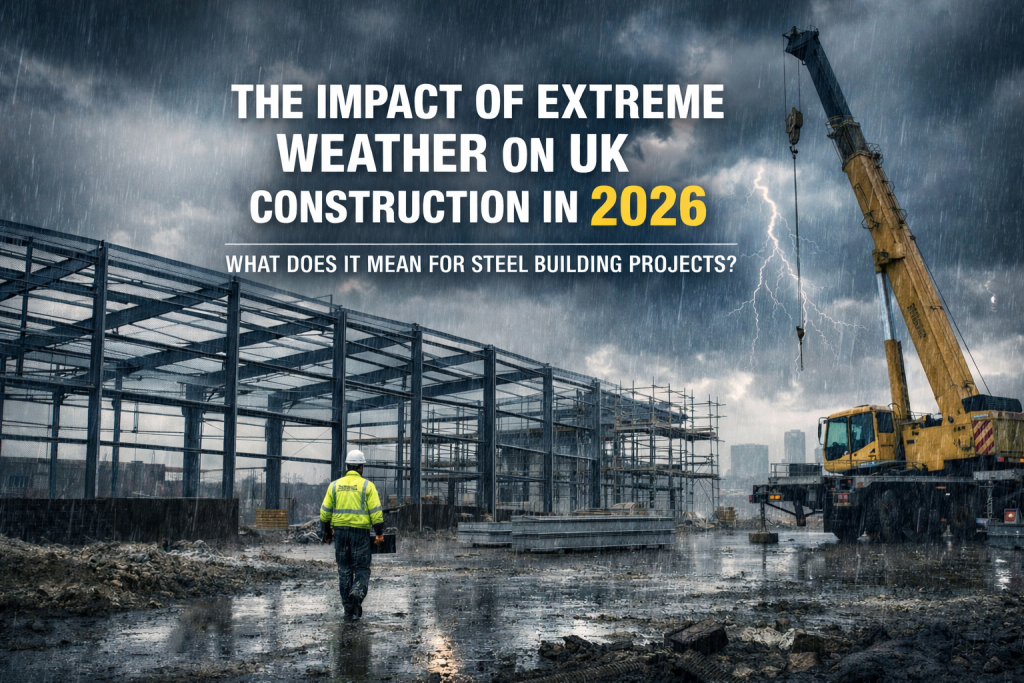
The Impact of Extreme Weather on UK Construction in 2026
The UK construction industry in 2026 has faced unprecedented challenges due to extreme weather conditions. Prolonged rainfall, high winds, and unseasonal storms have caused delays across commercial, industrial, and agricultural building projects nationwide.
For specialist contractors like Hamilton Steel Buildings Ltd, weather disruption doesn’t just affect programmes – it impacts groundworks, steel erection, cladding installation, roofing works, and site safety planning.
If you’re planning a commercial steel building, warehouse, or bespoke cold rolled steel structure, understanding how weather affects construction timelines is now more important than ever.
🌧️ How Bad Weather Impacts Steel Building Projects
Extreme weather impacts several stages of construction:
1. Groundworks & Foundations
Heavy rain leads to:
Waterlogged ground
Failed compaction tests
Delayed concrete pours
Increased costs for pumping and temporary drainage
This is a major issue for projects involving industrial units, warehouses, storage buildings, and workshops.
2. Steel Frame Erection
High winds can prevent safe crane lifts and steel installation.
Cold-rolled steel frames require precise installation tolerances wind gusts increase safety risk and slow erection programmes.
3. Cladding & Roofing Delays
Roofing membranes, composite cladding systems, and weatherproofing works must be installed in dry conditions. Persistent rain causes:
Water ingress risk
Delays to making buildings watertight
Extended scaffold hire
Programme overruns
4. Health & Safety Compliance
Poor weather increases:
Slips, trips and falls
Wind risks for MEWPs and scissor lifts
Manual handling risks
Requirement for revised RAMS and Construction Phase Plans
At Hamilton Steel Buildings Ltd, site safety remains a top priority, especially during high-risk weather periods.
🏗️ How Hamilton Steel Buildings Ltd Minimises Weather Delays
Despite the challenging weather of 2026, we’ve continued to deliver bespoke steel buildings nationwide by:
✔️ Forward planning weather-critical works
✔️ Programming steel erection during calm weather windows
✔️ Installing temporary weather protection
✔️ Using fast-track cladding systems
✔️ Maintaining flexible labour and plant availability
✔️ Coordinating closely with Building Control and structural engineers
✔️ Designing efficient cold-rolled steel frames to reduce time on site
This approach helps our clients avoid costly downtime and programme slippage.
🏭 Sectors Most Affected by Weather in 2026
Weather disruption has hit several sectors hard:
Commercial warehouses
Industrial units
Agricultural buildings
Golf buggy storage buildings
Vehicle storage facilities
Workshops & depots
Storage units
Businesses investing in steel buildings in the UK are now factoring in weather risk when planning construction schedules.
📈 Why Steel Buildings Remain a Smart Investment (Even in Bad Weather)
Despite challenging weather conditions, cold-rolled steel buildings remain one of the fastest and most reliable construction methods in the UK:
Benefits include:
Faster erection times
Reduced wet trades
Factory-manufactured components
Consistent quality
Improved cost certainty
Better weather resilience than traditional masonry builds
This is why many clients continue to choose steel building contractors in the UK for new developments and expansions.
📞 Planning a Steel Building Project in 2026?
If you’re considering a commercial steel building, warehouse, or bespoke storage facility, speak to our team early. Early planning helps mitigate weather risks and protects your programme and budget.
👉 Contact Hamilton Steel Buildings Ltd
🌐 https://www.hamiltonsteelbuildings.com
📍 Nationwide coverage
🏗️ Specialists in cold-rolled steel buildings & commercial cladding